Royal Windsor Pharmacy, Mississauga
Ceiling grid and panel project photographs.
Ceilings / Project planning
Ceiling tile installation and replacement starts with the existing grid, panel size, edge profile and room requirements. Compatible panels can refresh a suitable suspended ceiling without replacing the whole grid. Stains, damage and matching limitations should be reviewed before new tiles are ordered.
Request a Quote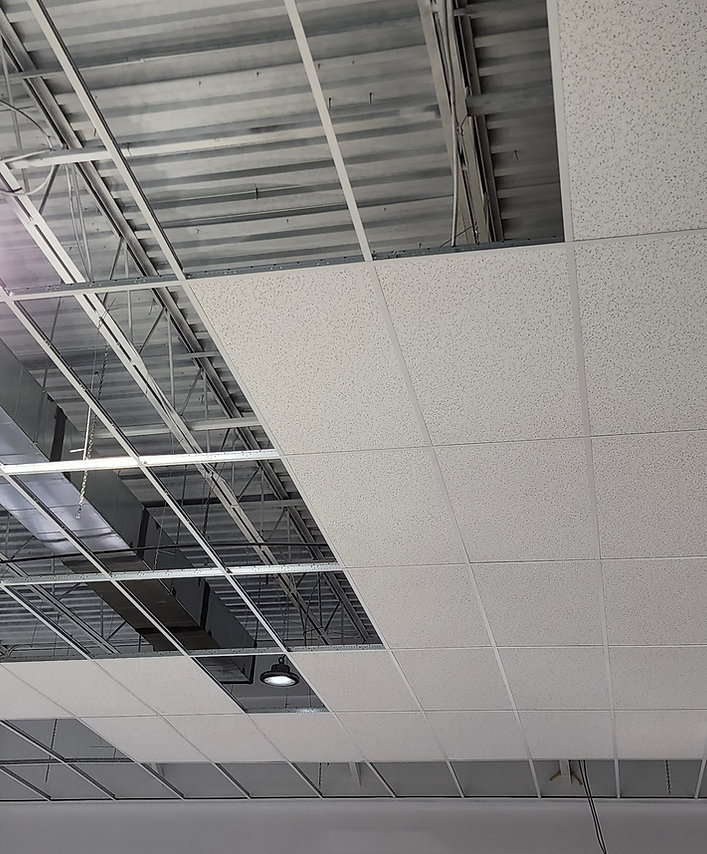
Tile replacement means changing the removable panels within a suspended ceiling. The scope may cover isolated damaged panels, a room or a larger finish update. It does not automatically include repairs to the grid, relocation of lights or work on services above the ceiling.
Describe how many areas are affected and show the whole room as well as the damaged panels. If the supporting grid is bent, misaligned or unsuitable, use the ceiling removal and replacement guide to consider a wider scope.
Nominal 2 x 2 ft and 2 x 4 ft sizes describe common ceiling modules. Size alone is not enough to confirm a fit. The tile edge profile, grid face and system details also matter, particularly when replacing older material.
Provide a close-up of the panel edge, the grid and any legible product identification already available. Do not assume that cutting one panel size into another creates the specified edge or a compatible finished panel. The T-bar system overview explains why the grid and tile must be considered together.
Matching depends on the existing pattern, colour, edge and current product availability. Even a similar product can look different beside panels that have aged. An exact match should be confirmed rather than promised from a general room photograph.
Compare an isolated replacement with replacing a defined area, such as a complete room, if visual consistency is important. Agree the boundary and available options before ordering. Keep any known product details with the inquiry; they are more useful than a description such as “standard white tile.”
A new panel replaces the visible finish but does not correct the cause of damage. Tell us whether stains followed a leak, whether the cause has been resolved and whether the grid was affected. Sagging, broken or repeatedly damaged panels may need a broader review of conditions.
The quote should distinguish tile work from plumbing, moisture investigation or other repairs. If the material or condition is uncertain, agree how it will be assessed before replacement proceeds. Do not treat a colour match as confirmation that a product suits the room.
Acoustic ceiling panels can absorb sound within a room. Performance varies by product and the complete room design; replacing panels alone is not a guarantee of soundproofing between spaces.
See commercial ceiling planning for the wider application discussion. No brand or performance rating is selected without the project requirements.
Furniture, counters and equipment affect access even when the work is limited to panels. Identify occupied rooms, working-hour restrictions and where materials can be stored. A phased update may need separate work areas and repeated setup.
Confirm whether removal and disposal of old tiles are included and whether any existing fittings need attention from another trade. A clear room-by-room list helps distinguish panel quantities from additional work. These details belong in the quote rather than being assumed after materials arrive.
Our ceiling cost guide explains the difference between a panel-only scope and wider grid work. For a new ceiling rather than replacement panels, see Toronto installation planning.
Existing project records
Ceiling grid and panel project photographs.
Published ceiling photographs; no panel brand or performance inferred.
Start with your space
Send your location, photographs, approximate area and the work you have in mind.
Request a Quote